-
 Knoppix Performance on USB with ReiserFS
Hi people, this is my first post of this forum; i have experimented a knoppix configuration in a ReiserFS formatted USB Stick, where the performance and boot.
I Have not used the "flash-knoppix" script, because it only creates FAT32/vfat filesystem. So i firstly did a mkfs.reiserfs on there, then manually copied Knoppix files. After that i copied the grub directory from a knoppix environment (/boot/grub) and ran the grub shell to install manually on the MBR of that USB Stick. Then i edited the grub file manually with my desired options for boot.
The result is that the knoppix boot only took nearly 15 seconds, and the knoppix persistent image only 3 seconds  (Note that my laptop is a dell inspiron 1525 with 2GB RAM and 2.1 GHz dual core CPU, also without a hard disk connected)
These steps are very useful.
-
Senior Member
registered user
Welcome
Greetings and welcome to the forum, fmateo.
I'm very interested in your effort for a number of reasons.
1. My setup is a 2 Gb LiveUSB on a 1545 with a time to on-line
with wifi of about 43 seconds. I would be nice to compare
these times under the same assumptions, boiling it down to
just fat32 vs Reiserfs, if possible.
2. I'd been wondering about the 0wn 'hard drive install' that
uses Reiserfs. I've not understood KK's reason for using Reiser
for that variant of Knoppix.
Tell us more.
Last edited by utu; 01-16-2012 at 08:00 PM.
-
Its a good idea to do that comparison in 2 recorded videos on same laptop hardware resources.. I will going to format another USB stick, using Fat32 filesystem
-
Senior Member
registered user
Here's how I go about estimating 'time-to-online'
.
Estimating time to on-line with wifi:
I use ntpdate, and have /var/log/syslog re-activated.
You can use Synaptic to add ntpdate.
If you need to re-activate syslog, see my 'Tweak #3' at:
http://www.knoppix.net/forum/threads...ghlight=syslog
I have added a hidden file '~/.bashrc, (in /home/knoppix) which contains:
alias sl='less /var/log/syslog'
alias timeto='sl|grep -m 1 ntpdate; sl|grep restart'
Open up a terminal to 80 columns, enter 'timeto' and look at the first 15 characters
in each of the two lines. If you subtract the minutes and seconds,
and disregard the (your.hrs) hours difference between (your.st)ST and GST,
then that is my estimate of the time it takes to get on-line with wifi.
Using 'Class 2' SanDisk SD Cards, I get about 43 seconds.
Class 2 means 2 Mb/sec minimum, but nominal r/w speed for these inexpensive cards
are not specified, nor guaranteed by SanDisk.
-
I've not understood KK's reason for using Reiser
for that variant of Knoppix.
KKs answer:
This would be the "install knoppix on harddisk" option, instead of "flash-knoppix".
It creates swap and at least one reiserfs partition.
To answer the next upcoming question already ("why reiserfs?"): I use this because it automatically repairs itself during mount in case of a previous crash, which may be less confusing and time-consuming for beginners than a file system check in ext3.
http://lists.debian.org/debian-knopp.../msg00007.html
-
Senior Member
registered user
Thanks, Werner; but,
That is the explanation by KK that I don't understand:
1. Would Reiserfs be a good idea as well for LiveUSB?
2. If so, why aren't we using it now?
3. For the 'usual' crashed LiveUSB should one try a fsck to repair it?
4. In case 3, I've alway just burned a new copy & brought it up-to-date
with a backup of home/, etc/ and 'syslinux.cfg
What is KK saying here, anyway?
I was hoping fmateo (or anyone) had an explanation I could understand.
__________________________________________________ _____________________
Also, in my post #4 here, the units are MB/s not Mb/s.
B/s are 8 b/s, in SanDisk documentation. I have the feeling that
the USB is not slowing things down, but I'm not sure of the math.
-

I did the syslog and ntpdate procedures, and the result was 42 seconds on my laptop (with wifi), should be some seconds less with wired conection...
Next step is to compare briefly with a vfat formatted usbstick and another one formatted as reiserfs
-
Senior Member
registered user
Greetings, fmateo.
In regard to times-to-get-on-line, It looks like we get about the
same result for 'timeto', if you're using that for your estimate.
You may have noticed that 'timeto' is not a great estimate if you
use a watch and count the seconds from 'enter' at the Knoppix boot
prompt until the time the network manager icon says you are on-line.
I get somewhere between 50 and 60 watch-seconds depending, possibly,
on which and how many USBs are plugged into the laptop.
'timeto' just tells us how long the first syslog takes. I don't think
it accounts for the initial USB searches and kernel loading, all
happening before there is any terminal record of events.
I think the un-accounted for time may be in the vicinity of 15 to 22 seconds.
Last edited by utu; 01-19-2012 at 01:05 AM.
Tags for this Thread
 Posting Permissions
- You may not post new threads
- You may not post replies
- You may not post attachments
- You may not edit your posts
-
Forum Rules

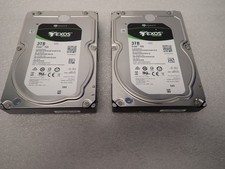
(2) Seagate SAS Hard Drive Exos 7E8 3TB 7200RPM 128MB 12Gb/s 3.5 ST3000NM0035
$49.99
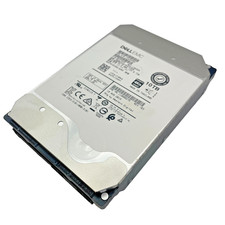
Dell EMC WD-HITACHI H5H72101CLAR10T0 10TB 7.2K SAS 12Gb/s SED 3.5in A POH 0-50k
$189.99
Seagate BarraCuda ST3000DM008 3TB Internal SATA 6Gb 3.5" Hard Drive 7200RPM 64MB
$91.99
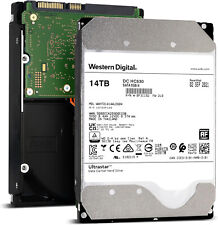
WD Ultrastar DC HC530 14TB SATA 6G 3.5" 7200RPM Enterprise HDD - WUH721414ALE604
$329.99
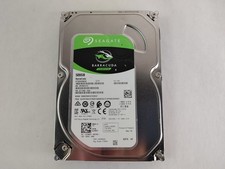
Seagate ST500DM009 BarraCuda 500 GB 3.5" SATA III Desktop Hard Drive
$14.99
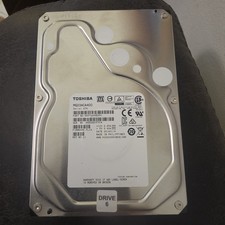
Toshiba MG04ACA400 4TB 3.5-inch SATA 6 Gb/s 7,200 RPM Internal Hard Drive
$49.99
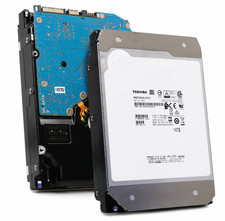
Toshiba 14TB MG07 MG07ACA14TEY 7.2K RPM SATA 6Gb/s 512e 3.5" Enterprise HDD
$299.00
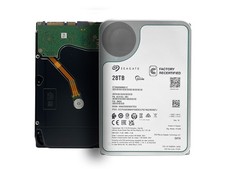
Seagate ST28000NM001C 28TB 256MB 7200RPM 3.5" SATA 6.0Gb/s Enterprise Hard Drive
$669.99
Seagate 6TB HDD ST6000NM0034 7.2K 3.5" SAS 12Gb/s (NOT FOR PC - FOR SERVER ONLY)
$87.00
Western Digital X376_WVELE08TA07 8TB 3.5" SAS-3 HDD
$159.99



 Reply With Quote